
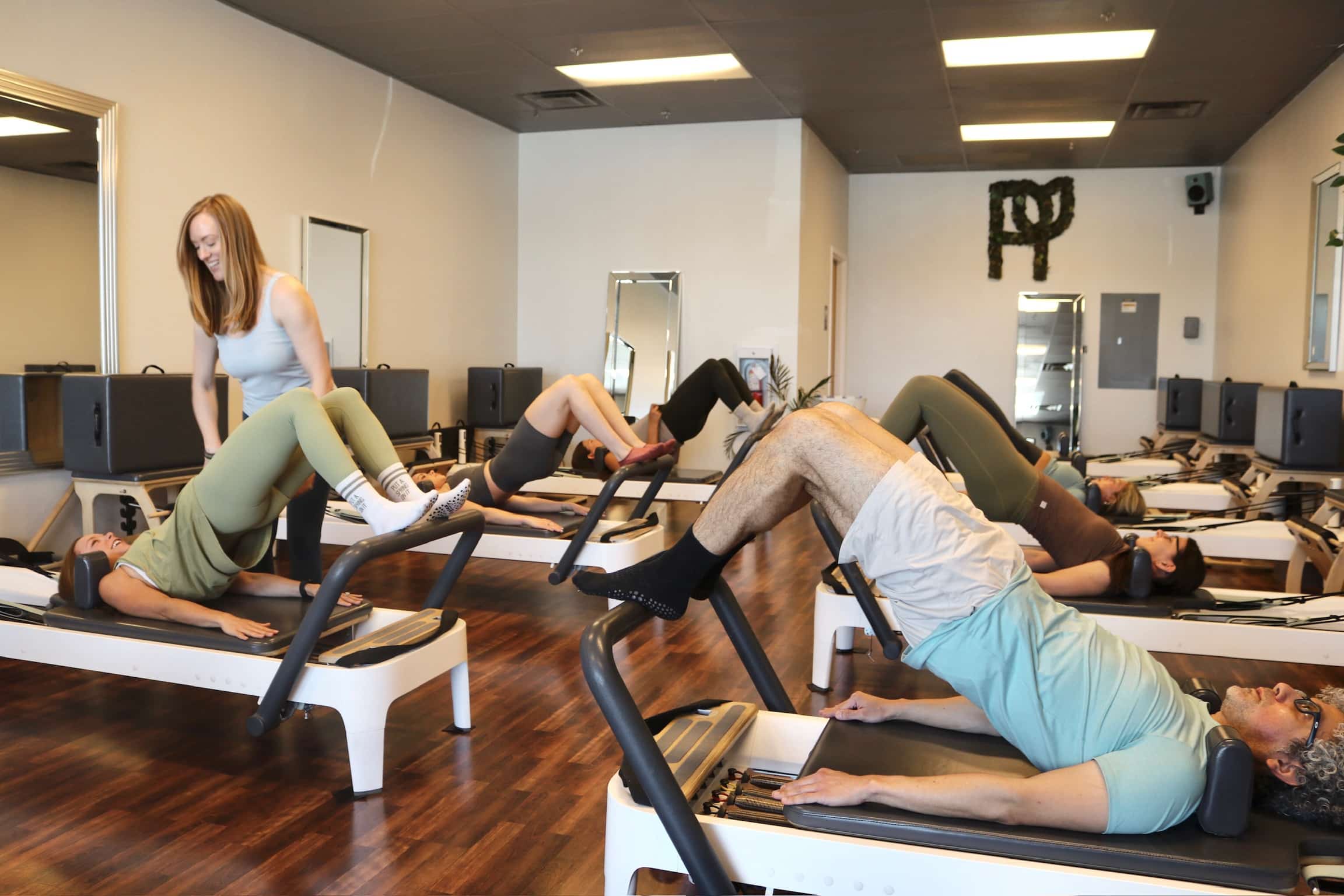
What Is Pilates Really For? (Hint: It’s Not About Exhaustion)
In a fitness world often dominated by sweat, speed, and intensity, Pilates can feel like a quiet rebellion. It doesn’t always look flashy. It doesn’t demand max reps or loud music. And often, it leaves you walking out of class feeling energized, not exhausted.
That’s not a flaw in the method—it’s the point.
Pilates was designed with a different goal in mind: not to deplete you, but to organize you. To help your body move better, breathe deeper, and stay resilient for the long haul.
So what is Pilates really for? Let’s take a closer look.
A System Designed for Longevity
Pilates wasn’t created as a quick-fix fitness trend. It was developed by Joseph Pilates in the early 20th century as a system of movement designed to improve posture, core strength, circulation, breath, and overall vitality.
He called it Contrology—the art of using the mind to guide and refine the body. And while today we simply call it Pilates, that original philosophy remains at the heart of the method.
At its core, Pilates is about:
- Moving with intention
- Strengthening from your center
- Improving functional mobility
- Creating symmetry, control, and coordination
In other words, it’s not just about what you do—but how you do it.
The Six Pilates Principles
To better understand what Pilates is meant to do, it helps to return to its foundational principles. These six guideposts are still used by trained instructors worldwide to bring depth and clarity to each session:
- Breath – Supporting movement and calming the nervous system
- Concentration – Focusing the mind to increase effectiveness
- Control – Moving deliberately to build true strength and precision
- Centering – Engaging the core as the powerhouse of movement
- Precision – Aligning the body for optimal function and safety
- Flow – Linking movements into seamless, integrated patterns
These principles are what distinguish Pilates from other movement methods. They prioritize quality over quantity, and function over fatigue.
And while Pilates can be incredibly challenging, it’s a challenge rooted in awareness, not adrenaline.
“But Is It Supposed to Be Hard?”
This is a common curiosity—and a valid one. Because we’ve been conditioned to think that a workout only “counts” if we’re sore, dripping in sweat, or pushed to our edge.
But in Pilates, hard doesn’t always look like exhaustion. It often looks like:
- Slowing down enough to feel your deep stabilizers engage
- Holding a position with control and breath
- Coordinating movement with spinal alignment
- Finding balance in muscles that are overworked and underused
In fact, some of the most advanced Pilates work is incredibly subtle. It’s often the small refinements—the postural shifts, the breath patterns, the nuanced control—that take the most effort. And the most skill.
This is the kind of difficulty that builds resilience over time. It supports not just strength, but joint health, bone density, and nervous system regulation—things that become increasingly important as we move through midlife and beyond.
Why We Don’t Push to Failure
Many fitness trends are built on the philosophy of “go hard or go home.” But Pilates takes a different approach.
Instead of pushing to the point of exhaustion, it invites you to build capacity gradually and sustainably. This isn’t about dialing down the intensity—it’s about being strategic with it.
Research has shown that excessive, high-intensity exercise—especially without proper recovery—can lead to elevated cortisol, chronic inflammation, and burnout. For women navigating hormonal changes in perimenopause or beyond, this can have a significant impact on energy, sleep, and mood (Sims, 2022).
Pilates offers an alternative—strength training that supports the body’s natural rhythms, enhances posture, and improves muscular efficiency without spiking stress hormones unnecessarily.
The Power of Precision
One of the most overlooked aspects of Pilates is that the work deepens as your awareness grows.
You might begin by simply following along—but over time, you start to notice more. How your spine stacks. How your breath supports your movement. How certain muscles fire (or don’t). You develop a relationship with your body that is intelligent, respectful, and refined.
That’s not just physical fitness. That’s embodiment.
And embodiment is where sustainable strength lives—not in short-term soreness, but in long-term trust.
A Practice That Evolves With You
Pilates is not about achieving a peak performance and then plateauing. It’s a method that can evolve with your body through every season of life—from injury recovery to postnatal support to strength in your 70s.
At our studio, we use this method to help clients feel:
- More connected to their core and posture
- More confident in how they move through daily life
- More supported in transitions like midlife, menopause, or recovery
- More present in their body, without pressure to perform or compete
It’s not about making every class “harder.”
It’s about making every class more intentional.
Final Thoughts: Redefining “Effective”
In a culture that often praises extremes, Pilates offers something quietly radical:
Efficiency over exhaustion.
Stability over spectacle.
Presence over performance.
The next time you step into class, we invite you to notice what’s happening beneath the surface—how your breath supports you, how your spine aligns, how your core initiates movement.
That’s the magic.
That’s the strength.
That’s what Pilates is meant for.
Want to experience the power of intentional movement?
You’re always welcome here. Whether you’re brand new to Pilates or looking to deepen your practice, we’re here to support your journey—one breath, one movement, one mindful moment at a time.
Learn more about private sessions
Or reach out if you’d like help finding the right place to begin.
We’re here to help you move better, feel stronger, and stay connected—to your body and your life.